
Release timeline: when to send what
In this guide
- The timeline at a glance
- 8 weeks before: lock the release
- 6 weeks before: deliver to your distributor
- 5 weeks before: build the press kit and the list
- 4 weeks before: the main promo
- 3 weeks before: the second wave
- 1–2 weeks before: follow up once
- Release day
- 1–4 weeks after
- Keep the whole release in one place
Most indie releases lose their best chance before release day. The track goes to the distributor late, the promo goes out the same week, and by the time anyone replies, the release is old news. A simple eight-week plan fixes most of that.
The plan below is for a single. For an EP or album, start two to four weeks earlier.
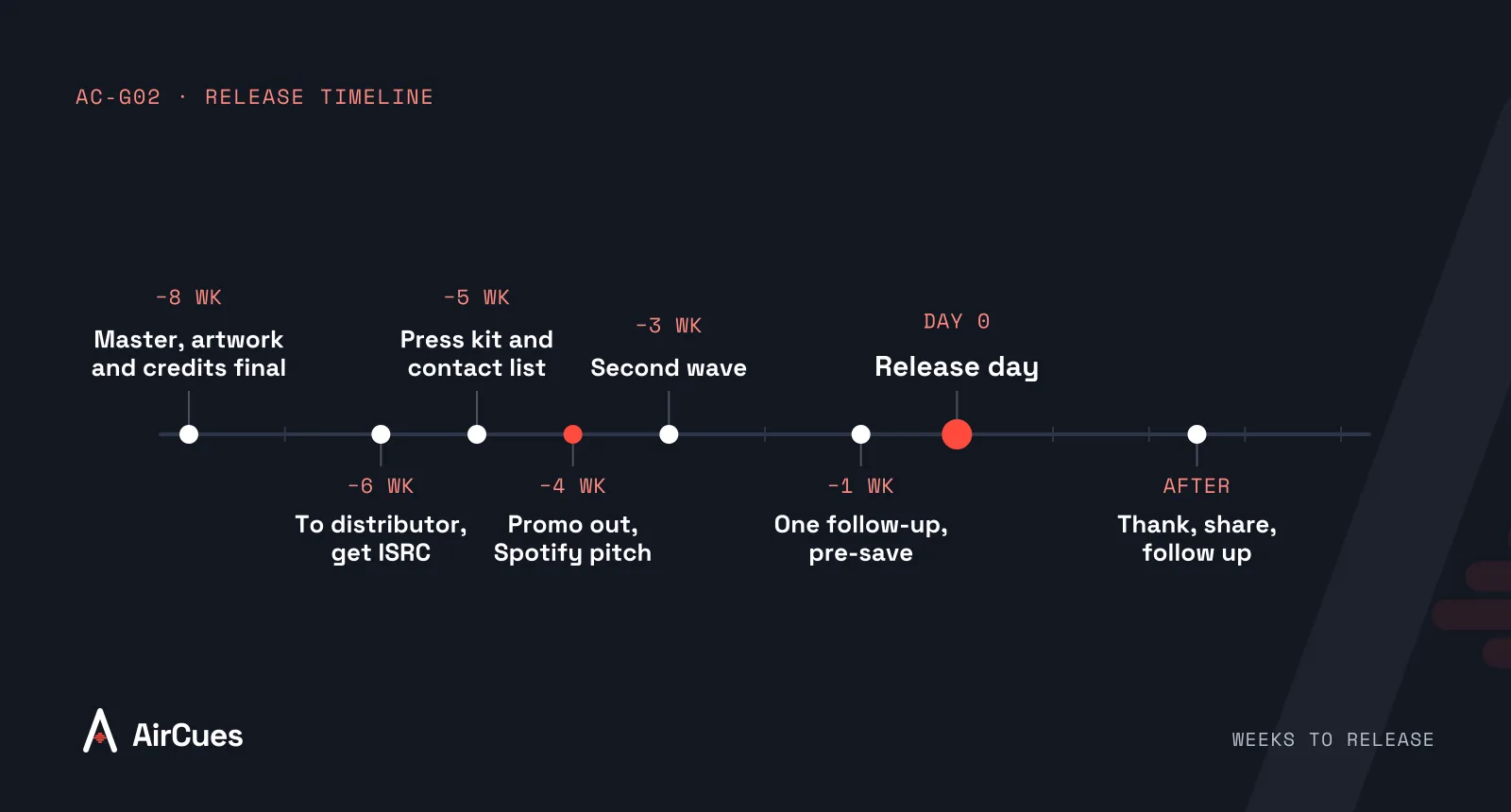
The timeline at a glance
| When | What to do |
|---|---|
| 8 weeks before | Master, artwork and credits final. Pick the release date. |
| 6 weeks before | Deliver to your distributor. Get ISRC and UPC. Register the song. |
| 5 weeks before | Build the press kit and your contact list. |
| 4 weeks before | Pitch to Spotify editors. Send promo to radio, press and blogs. |
| 3 weeks before | Second wave: specialist shows, playlists, local media. |
| 1–2 weeks before | One follow-up. Pre-save link out to fans. |
| Release day | Smart link to fans. Streaming links to everyone who got the promo. |
| 1–4 weeks after | Thank, share, follow up on plays and reviews. Plan the next one. |
8 weeks before: lock the release
- Final master and artwork. Nothing gets sent until both are done. Changing them later means re-delivering everywhere.
- Credits and facts. Writers, producers, performers, label, release date. Write them down once and reuse them everywhere.
- Pick a Friday. Most releases come out on Fridays, and editorial playlists update around that rhythm.
6 weeks before: deliver to your distributor
Upload to your distributor (DistroKid, CD Baby, Amuse or similar) at least four weeks before release. Stores need time to process, and you need the release to show up in Spotify for Artists before you can pitch it.
- You’ll get an ISRC for each track and a UPC for the release. Copy them into your credits.
- Register the song with your collecting society so royalties from airplay can reach you. In Finland that’s Teosto for writers and Gramex for performers and recordings.
5 weeks before: build the press kit and the list
- Press kit: streamable track, download files, artwork, two or three press photos, a short story about the track, credits and a contact. See What to include in an EPK (coming soon).
- Contact list: five to twenty shows, journalists and blogs that actually cover your kind of music. Names, not just station addresses.
4 weeks before: the main promo
- Pitch to Spotify editors in Spotify for Artists. It must be done at least seven days before release, but earlier is better.
- Send the promo to radio, press and blogs. One personal email per person, one link to listen and download. See How to send your music to radio.
- Ask for a premiere if a blog or show might want to debut the track. That needs the most lead time.
3 weeks before: the second wave
Specialist and genre shows, independent playlist curators, local newspapers and community radio. They often need less lead time, and a second wave keeps your week from being one big batch.
1–2 weeks before: follow up once
- One short follow-up to people who haven’t replied. One line, with the link again. Then let it be.
- Pre-save link to fans, so the release lands in their library on day one.
- Social content ready: a short clip, the cover, a photo. Schedule it.
Release day
- Smart link to fans: one page that opens the track in every streaming service.
- Streaming links to your contacts: a short note to everyone who got the promo. Some only play released music.
- Post, then get back to making music. Release day isn’t the finish line.
1–4 weeks after
- Thank people who played, reviewed or shared. Short and personal.
- Share what happened: a radio play, a review quote, a playlist add.
- Follow up where it makes sense: a host who opened the promo but didn’t reply may still be interested. One message, not more.
- Write down what worked for the next release: who replied, who played, what you’d do earlier.
Keep the whole release in one place
AirCues keeps the press kit, the promo email and the release-day smart link together. Build it once at five weeks and use the same release all the way through.
Free for DIY artists → AirCues.com
Questions, “but what about X?”, or a station I should know about — DM @aircues on Instagram. I read every one.
FAQ
How far in advance should I send music to radio?
Two to four weeks before release is common. For premieres or bigger outlets, four to six weeks.
Can I release without a plan like this?
Yes, but promo sent on release day rarely gets heard in time. Even two weeks of lead time helps.
When should I upload to my distributor?
At least four weeks before release, so you can pitch to Spotify editors and have your ISRCs ready for the promo.